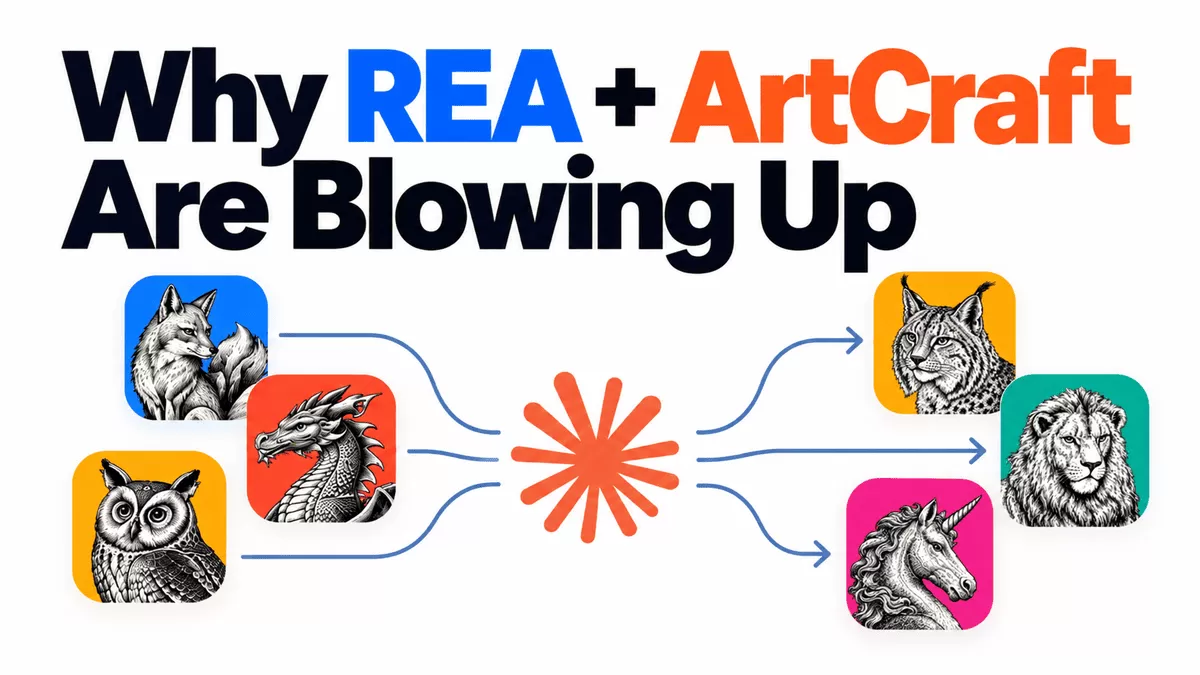
A new wave of AI-built software clones is drawing attention across the developer community. According to KDnuggets, individual developers are using AI coding agents to recreate commercial tools from Adobe and Microsoft, and they are doing it without access to the original source code. Two projects stand out: Reverse Engineer Anything (REA), a reverse-engineering toolkit, and ArtCraft, a collection of applications that mimic Adobe and Microsoft products. The trend matters because it could weaken one of the strongest barriers that keeps people paying for expensive software.
Why switching costs have kept users loyal
Free alternatives to commercial software have existed for years. GIMP competes with Photoshop, Inkscape offers vector graphics editing, and LibreOffice provides alternatives to Word, Excel, and PowerPoint. Yet many users have never moved to them.
The main obstacle has been switching costs. Most open-source alternatives come with their own interfaces, keyboard shortcuts, and workflows. A designer who has spent a decade learning Photoshop may find that moving to GIMP feels like learning a different program entirely.
The new generation of AI-built clones takes a different route. Rather than inventing a new experience, developers are trying to reproduce the layouts, menus, shortcuts, and core functions that users already know. The appeal is easy to see: a user could open a free alternative and immediately know where everything is, without long tutorials and, potentially, without a subscription.
KDnuggets notes that the promise is still unproven. The quality and compatibility of these early clones vary widely, and many are still in development.
REA and the easier path to reverse engineering
Reverse Engineer Anything, or REA, is one of the most visible projects behind the movement. KDnuggets describes it as an AI-powered reverse-engineering toolkit that has already attracted more than 130,000 GitHub stars.
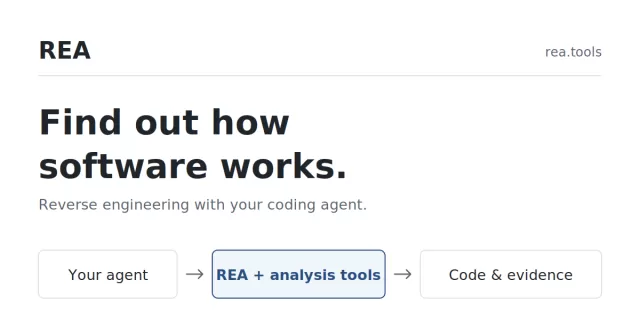
Reverse engineering has traditionally demanded specialist knowledge, complex tools, and many hours of manual analysis. REA connects AI coding agents, including Claude Code, Codex, and Cursor, with established reverse-engineering tools such as Ghidra, Hopper, and IDA. In the workflow KDnuggets describes, a developer supplies an application's binary, and the AI agent analyses its functions, dependencies, architecture, and internal behaviour without needing the original source code.
Those findings can then be used to recreate a feature or build an independent alternative.
Early showcases
According to KDnuggets, developers have already used REA for a range of experiments. Showcases include reconstructing the clipboard functionality of Notion, recreating the sound calculations in the game DX-Ball, and recovering mathematical routines from older PC-98 games.
KDnuggets also points out that REA cannot produce a perfect clone automatically. Its main contribution is making existing software easier to understand, which is the step that has historically consumed the most time.
ArtCraft and the Adobe and Microsoft lineup
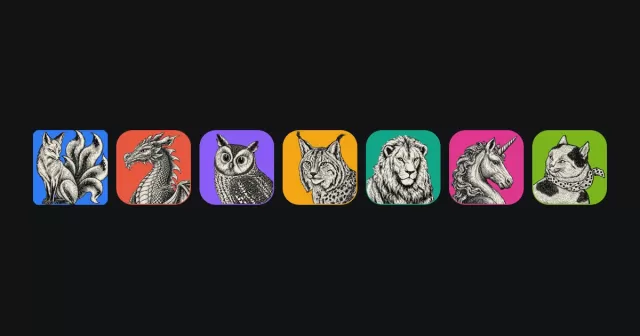
The second project, ArtCraft, is led by developer Brandon Thomas, who has built a set of Adobe-inspired applications using Claude and the Rust programming language. The lineup includes PhotoCraft for Photoshop-style image editing, VectorCraft for Illustrator-style graphics, and FilmCraft for Premiere-style video editing.
Thomas initially set an ambitious goal of reaching complete Adobe feature parity within a month. KDnuggets reports that the target has drawn considerable skepticism.
The effort extends into Microsoft Office territory as well. The ArtCraft ecosystem includes several projects of this kind:
- WordCraft recreates the familiar Microsoft Word ribbon and document-editing workflow. Its developer estimates roughly 62% real-world feature parity.
- GridCraft targets Excel, with support claimed for more than 500 spreadsheet functions.
- DeckCraft targets PowerPoint and reports 79% feature breadth, but its developer puts practical readiness as a replacement at approximately 55%.
The gap between feature breadth and practical readiness is the central point for anyone evaluating these tools. A program can cover many features and still fall short in daily use.
Excitement, skepticism and open questions
KDnuggets describes the reaction as a mix of enthusiasm and doubt. Many developers are impressed that individuals can now rebuild complex commercial software with AI agents. Creators, meanwhile, are interested in cheaper tools that look and feel like the ones they already use.
Other observers question whether vibe-coded applications can match the reliability, performance and functionality of mature products such as Photoshop and Excel. Early testers have raised concerns about bugs and missing features.
The debate also touches on ownership and legal questions. KDnuggets notes that these early clones still face challenges with reliability, compatibility and intellectual property rights. Whether a tool built by studying a commercial application's behaviour is acceptable is a question that remains open.
The pace of the movement is also striking. KDnuggets reports that REA began attracting wide attention only about four days before the article was written, and that it had already gathered roughly 134,000 GitHub stars in that short period.
What comes next
The most likely near-term outcome is not a sudden replacement of Adobe or Microsoft products. It is a steady growth of narrower tools that cover the features most users rely on, and that give people a cheaper or more customisable option for specific tasks. KDnuggets argues that the more serious threat to incumbents is not another free program, but software that feels familiar, delivers the essentials, and gives users no strong reason to keep paying. Whether these clones reach that standard will depend on the quality of their code, how they handle intellectual property questions, and how users respond when they hit the inevitable rough edges.
Related: ArtCraft Launcher Aims to Be One Home for the Craft App Suite · GridCraft: Open-Source Excel-Style Spreadsheet Built in Rust
Comments (0)